
Learn How to Spot Quality Apparel Before You Buy: Seams Fabric Fit, plus smart checks for durability, comfort, and lasting style. A shirt can look great on the hanger and still disappoint after three washes. A jacket can feel expensive in the store and start pulling at the seams after one season. The difference is often not the label or the trend. It is the construction.
Buying better clothes does not mean buying the most expensive item in the room. It means knowing what to check before you hand over your card. The strongest clues are usually right in front of you: the seams, the fabric, and the fit.
These three details tell you how a garment was made, how it may wear over time, and whether it belongs in your closet. If you want to know how to spot quality clothing, start with these checks. They take only a few minutes, and they can save you from pieces that look good once but never earn their keep.
Think of this as a hands-on apparel inspection you can use in a fitting room, at a vintage shop, while shopping online, or when comparing two similar items. It is not about perfection. Even well-made clothing can have quirks. The goal is to notice the signs that point to comfort, durability, and long-term value.
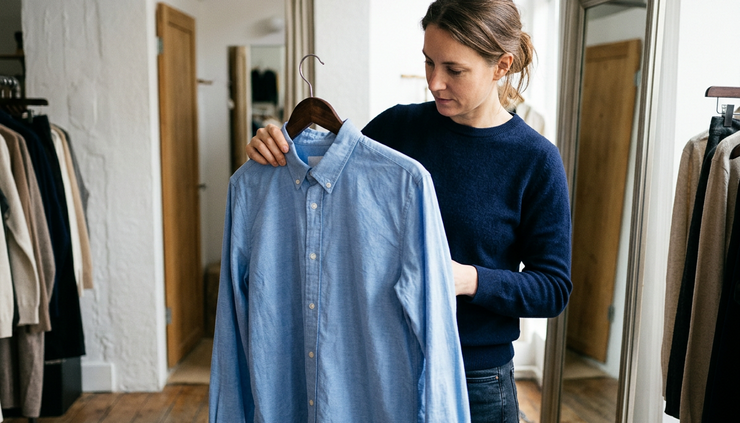
Seams reveal how well a garment was built
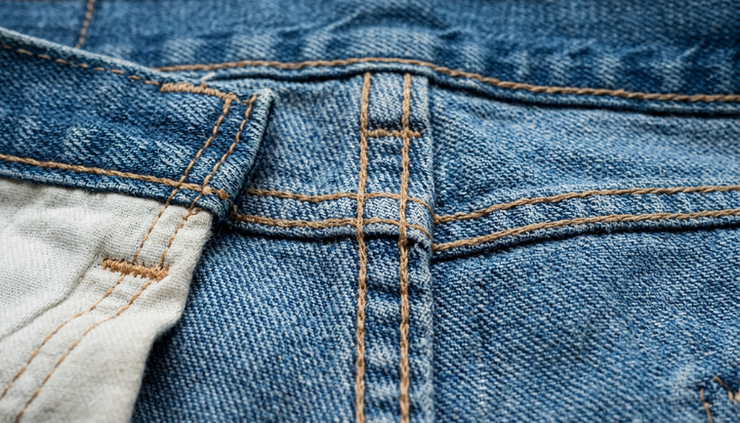
Seams are the framework of clothing. They hold fabric pieces together, shape the garment, and absorb tension when you sit, walk, bend, reach, or wash the item. Good seam quality often means the maker cared about the parts you do not notice at first glance.
Start by turning the garment inside out. Many flaws hide there. A clean exterior can still have messy internal stitching, loose threads, or weak finishing that shortens the life of the piece.
Look for straight, even stitching
Good stitching usually looks consistent. The stitches are close enough to secure the fabric, but not so tight that they pucker it. The line should run smoothly along the seam without drifting, skipping, or wobbling.
A well-made button-down shirt, for example, will usually have neat stitching around the collar, cuffs, side seams, and hem. On jeans, check the inseam and the rise. These areas deal with repeated friction and stress, so sloppy stitching there matters.
Signs of stronger stitching include:
Even stitch length
Stitches should look similar from one end of the seam to the other.
Straight seam lines
A slight curve is normal where the garment is shaped, but the stitching should not wander randomly.
No skipped stitches
Gaps in the stitch line can weaken the seam and lead to unraveling.
No loose thread nests
Tangled thread on the inside can point to rushed construction or poor machine tension.
A quick test helps. Hold both sides of a seam and gently pull. Do not yank. If the stitches open wide or threads start to strain, that seam may not last. A strong seam has a little give, but it should not gap under light tension.
Check how the seams are finished
Raw fabric edges can fray. Seam finishing prevents that. The finish does not have to be fancy, but it should suit the fabric and the garment.
Common seam finishes include:
Seam finish | What it looks like | Where you may see it | What to check |
Serged edge | Looped thread wraps the raw edge | T-shirts, casual dresses, knitwear | Loops should be secure, not loose or broken |
French seam | Raw edge is enclosed inside the seam | Lightweight shirts, silk pieces, fine blouses | Seam should feel smooth and not bulky |
Flat-felled seam | Fabric is folded and stitched down flat | Jeans, work shirts, durable jackets | Stitching should be straight and secure |
Bound seam | Edge is covered with a strip of fabric | Unlined jackets, special occasion pieces | Binding should lie flat without twists |
A serged seam is common and can be perfectly fine. The question is whether it is clean and stable. If the edge is already fraying on the hanger, it will not improve after washing.
For transparent or delicate fabrics, inspect seam finishing closely. A sheer blouse with bulky, uneven seams may never hang well. A lightweight fabric needs a finish that looks tidy and feels smooth against the skin.
Pay attention to stress points
Some parts of clothing work harder than others. These areas need stronger construction.
Check these stress points:
Underarms
Crotch seams
Pocket corners
Waistband joins
Buttonholes
Zipper ends
Shoulder seams
Strap attachments
Belt loops
On jeans, look at the pocket corners and belt loops. Quality pairs often use extra stitching or reinforcement at these points. On a tote-style jacket or dress with straps, tug gently where the strap meets the body. If the stitching is sparse or loose, that point may fail first.
Buttonholes deserve special notice. They should be dense, neat, and free of fraying. A buttonhole that looks fuzzy before the first wear is a warning sign. Buttons should feel secure, not dangling by a few threads.
Compare matching seams
Symmetry can tell you a lot. Lay the garment flat or hold it up. Do the side seams hang straight? Do the sleeves look the same length? Is one shoulder seam sitting farther forward than the other?
Small variations happen, especially in handmade garments. But obvious mismatches can affect how the garment sits on the body. If a skirt twists while hanging, or pant legs rotate around the leg when worn, poor cutting or sewing may be the cause.
A useful rule in the fitting room is simple: if a seam looks strained before you move, it will feel worse during real wear.
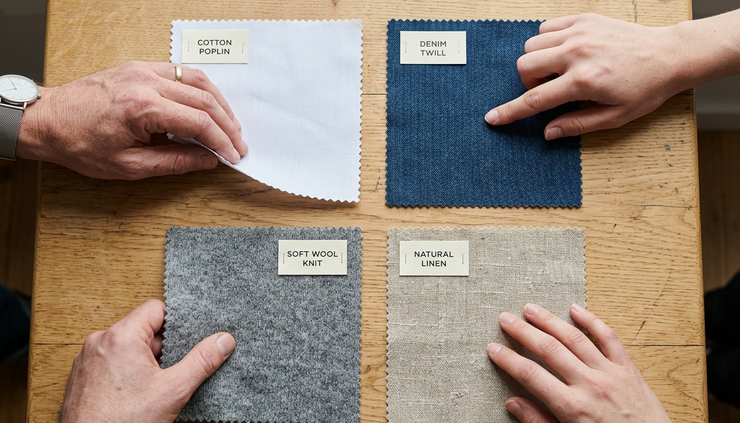
Fabric tells you how the garment will feel and age
Fabric quality shapes almost everything about a garment: comfort, drape, warmth, breathability, durability, and care. Two shirts can have the same cut, color, and size, yet feel completely different because of the textile quality.
The label gives useful information, but your hands and eyes matter too. Fiber content, weight, weave, stretch, surface texture, and recovery all help you judge whether a piece is worth buying.
Read the fiber content, then touch the fabric
Start with the care label. It tells you what the garment is made from and how it should be washed. Natural fibers like cotton, linen, wool, and silk each behave differently. Manufactured fibers like polyester, nylon, rayon, modal, lyocell, and elastane also vary widely in quality.
No fiber is automatically good or bad. A cotton T-shirt can be thin and flimsy, while a polyester running top can be durable and comfortable. The key is whether the material suits the garment’s purpose.
For example:
A crisp cotton poplin works well for a button-down shirt because it holds shape.
A dense cotton twill works well for chinos because it resists abrasion better than a very light weave.
Merino wool can work well for sweaters and base layers because it offers warmth without heavy bulk.
A small amount of elastane can help jeans, trousers, and fitted dresses move more comfortably.
Linen softens over time and breathes well, but it wrinkles. That is part of its character.
After reading the label, feel the fabric. Does it feel smooth, dense, soft, crisp, springy, or limp? Good fabric usually has a sense of intention. It feels right for the item.
A winter coat should not feel like a thin shirt. A summer shirt should not feel stiff and airless. A knit sweater should have enough body to hang well, not stretch out under its own weight while still on the hanger.
Hold fabric up to the light
This is one of the easiest quality checks. Hold the garment up toward natural light or a fitting room light. You are looking for consistency.
If the fabric is meant to be sheer, evenness matters. If it is not meant to be sheer, thin patches may be a problem. Check whether the cloth looks uniform across the garment. Watch for slubs, streaks, snags, weak spots, and uneven dye.
Some fabrics have intentional texture. Linen often has natural slubs. Denim may have variation. Tweed is built on texture. The issue is not texture itself. The issue is random flaws that make one area look weaker or poorly finished.
For printed garments, look at the print placement. Florals, stripes, checks, and plaids do not always need to match perfectly at every seam, especially at lower price points. Still, major mismatches at the center front, pockets, or side seams can make a garment look cheaper.
Test stretch and recovery
Stretch can be useful, but it should recover. Gently pull a small section of fabric, then release it. Does it bounce back, or does it stay wavy and distorted?
This matters most for:
Leggings
Jeans with stretch
Ribbed tops
Knit dresses
Waistbands
Cuffs
Sweaters
A ribbed cuff that stretches out in the store may lose shape fast. A pair of stretch jeans that bags at the knees after a few bends may not age well. Good stretch fabric should move with you and return close to its original shape.
Try this in a fitting room with jeans or pants. Sit down, stand up, and check the knees, seat, and waistband. If the fabric already looks baggy after two minutes, imagine a full day of wear.
Watch for pilling risks
Pilling happens when fibers rub together and form small balls on the surface. Some fabrics pill more easily than others, especially soft knits with loose or shorter fibers. Pilling is not always a sign of terrible quality, but heavy pilling early in a garment’s life can make it look worn out fast.
Before buying a sweater, rub a small hidden area between your fingers. If loose fuzz appears right away, be cautious. Look under the arms and along the sides if the piece has been tried on often. These high-friction zones can show early wear even on a new rack.
For knitwear, inspect the density. Hold the sweater gently at the shoulders. Does it stretch downward heavily? Are the stitches open and loose? A very open knit may snag more easily and lose shape, especially if it is stored on a hanger instead of folded.
Think about care before you buy
A garment is only useful if you can care for it. A beautiful shirt that requires special cleaning after every wear may not fit your everyday life. A dry-clean-only label is not bad, but it changes the real cost and effort of ownership.
Ask these questions:
Will this fabric work with how often I do laundry?
Does it wrinkle in a way I can live with?
Will it need ironing, steaming, hand washing, or flat drying?
Is the color likely to fade with frequent washing?
Will pet hair, lint, or dust cling to it?
This is where fashion sustainability and smart shopping meet. Clothing durability is not only about how long a garment could last in theory. It is also about whether you will actually wear, wash, repair, and keep it.
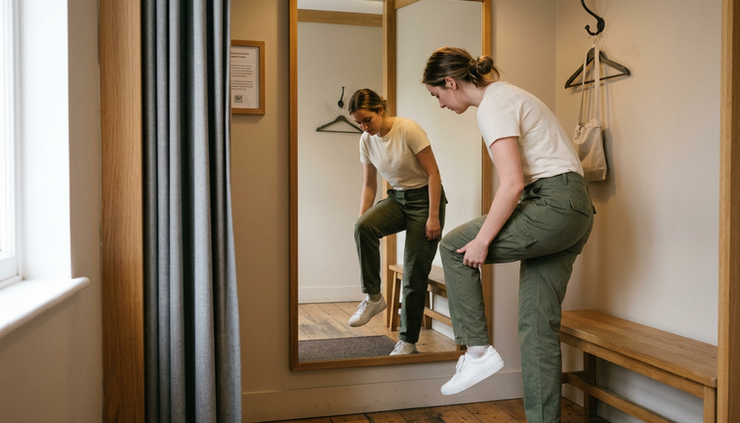
Fit decides whether you will actually wear it
A garment can have excellent fabric and careful stitching, but if it does not fit your body or your life, it will sit unworn. Fit is both visual and physical. The best clothing fit guide is your own movement.
Fit does not mean tight. It does not mean oversized either. Good fit means the garment allows comfort, movement, and the look you want without constant adjusting.
Start with the shoulders, waist, and rise
Some fit issues are easy to tailor. Others are harder and may not be worth the trouble.
For tops, jackets, and dresses, shoulders matter. Shoulder seams should usually sit near the edge of your shoulder, unless the design is intentionally dropped or oversized. If the shoulder seam is too narrow, the garment may pull across the upper back. If it is too wide without design purpose, the piece may look sloppy and restrict arm movement in an odd way.
For pants and jeans, check the rise and seat. The rise is the distance from the crotch seam to the waistband. If it is too short, the pants may pull or dig in when sitting. If it is too long, fabric may bunch in the front or back. The seat should have enough room to move without sagging or straining.
For skirts and dresses, look at the waist, hips, and hem. A straight skirt that rides up when walking may be too tight at the hips. A dress that pulls across the bust or back may need a different cut, not just a different size.
Move like you will move in real life
Do not stand still and decide. A mirror pose tells very little. Use a basic fit assessment in the fitting room.
Try these movements:
Raise both arms.
Sit down.
Bend to tie a shoe.
Walk several steps.
Turn side to side.
Reach forward as if grabbing something from a shelf.
Cross your arms if trying on a jacket.
Put your hands in the pockets if the garment has them.
After each movement, notice what happens. Does the shirt ride up? Does the waistband roll? Do the sleeves pull? Does the dress twist? Do the pants pinch at the thigh or gap at the back waist?
Good fit should not require constant correction. If you need to tug a hem, pull down a top, adjust a strap, or smooth bunching fabric every few seconds, the garment may not earn a regular place in your wardrobe.
Look for strain lines and drag lines
Fabric tells the truth about fit. Pulling, wrinkling, and twisting often show where the garment conflicts with the body.
Common signs include:
Horizontal lines across the chest, hips, thighs, or back
The garment may be too tight in that area.
Vertical folds near the waist or seat
There may be too much length or volume.
Diagonal lines from the armhole to the bust or back
The cut may not suit your proportions.
Puckering around buttons
The front closure is under strain.
Twisting side seams
The garment may be cut off grain or too tight in one area.
Some wrinkles are normal. Linen wrinkles. Loose garments fold. The concern is repeated strain that appears the moment you put the item on.
Button-front shirts offer a simple example. If the shirt fits at the waist but gaps at the chest, sizing up may make the body too loose. The better answer may be a different cut, a stretch fabric, or a style without front buttons.
Know what a tailor can and cannot fix easily
Tailoring can turn a good garment into a great one, but it cannot solve every issue.
Easier adjustments often include:
Shortening hems
Taking in a waist slightly
Shortening sleeves without complex cuffs
Replacing buttons
Fixing small seam openings
Harder or more expensive adjustments often include:
Changing shoulder width
Raising or lowering a rise
Reshaping armholes
Letting out seams with little extra fabric
Fixing twisted legs or poor grain alignment
Making a too-small garment truly comfortable
When shopping, ask whether the garment works well enough now. If it needs major changes before you would wear it, it may not be the right piece.
Choose fit for the way you dress
Quality fashion is not one silhouette. A relaxed linen shirt can be high quality. So can a sharp wool blazer, a dense cotton hoodie, or a simple pair of straight-leg jeans. The fit should match the garment’s purpose.
For everyday wardrobe essentials, comfort matters as much as appearance. A blazer for occasional events can feel more structured. A T-shirt for weekly wear should survive washing and let you move. Pants for commuting, errands, or travel need pockets, a stable waistband, and fabric that does not fight you.
This is one of the best buying tips for clothes: judge fit by repeat wear, not by a single flattering angle. If the item only feels good while standing still, keep looking.
A simple quality check before you buy
When shopping for clothes, it helps to have a short routine. You do not need to inspect every garment like a factory auditor. Just slow down long enough to check the areas that predict comfort and wear.
Use this sequence when comparing similar pieces.
Step one is to scan the outside
Look at the garment from a normal distance first. Notice whether it hangs well. Check if the color looks even. Look for twisting, rippling, stains, snags, dents from hangers, or stretched-out areas.
If it looks tired on the rack, it may not revive at home.
Step two is to check the inside
Turn it inside out. Inspect the seams, loose threads, hem, pockets, lining, and labels. A lined jacket or coat should have lining that lies smoothly, with enough ease to let the outer fabric move. A lining that pulls or hangs below the hem is a concern.
For pants, check the crotch seam, pocket bags, zipper, and waistband. For dresses, look at waist seams, darts, zipper ends, and hem finishing. For knitwear, check underarms and side seams.
Step three is to test touch and movement
Feel the fabric. Stretch it gently if it has stretch. Scrunch a corner in your hand for a few seconds, then release it. Some fabrics wrinkle by nature, but the scrunch test can show whether a garment creases sharply and stays crushed.
Try it on when possible. Move in it. Sit in it. Check it under the lighting available, and if you can, near daylight.
Step four is to judge value, not just price
A high price does not guarantee good sewing standards. A low price does not always mean poor construction. Value comes from the mix of materials, workmanship, fit, usefulness, and care.
Ask:
Would I wear this at least several times in the next season?
Does it work with pieces I already own?
Does the fabric match the care I am willing to give it?
Are any flaws small enough to accept or fix?
Would I still like it if the trend passed?
Customer reviews for clothing can help when buying online, especially if reviewers mention fabric weight, shrinkage, transparency, pilling, or sizing. Photos from real buyers can reveal fit and drape that polished product images may hide. Still, reviews are only one tool. Once the item arrives, inspect it before removing tags.
Here is a quick guide you can save for your next shopping trip.
What to inspect | Good sign | Warning sign |
Seams | Straight, secure, cleanly finished | Loose threads, gaps, puckering, fraying |
Stress points | Reinforced pockets, buttons, straps, and belt loops | Thin stitching where tension is high |
Fabric | Even texture, suitable weight, good recovery | Snags, weak spots, limp feel, heavy early fuzz |
Print or pattern | Balanced placement in visible areas | Distracting mismatches at center seams |
Fit | Moves with the body and feels comfortable | Pulling, twisting, gaping, constant adjusting |
Care | Fits your laundry habits | Too fussy for how often you will wear it |
Practical examples make the checks easier
Picture two plain black T-shirts. One has a ribbed neckband that lies flat, side seams that hang straight, smooth fabric with some density, and stitching that stays even around the hem. The other has a twisted side seam, a thin neckband that waves, and fabric that turns transparent when held to the light. They may look similar folded on a shelf. They will not wear the same.
Now compare two pairs of jeans. One has sturdy pocket corners, straight inseams, a zipper that lies flat, and stretch that recovers after sitting. The other has loose threads at the crotch seam, a waistband that gaps, and knees that bag within minutes. The second pair may still look fine in a quick mirror check, but daily wear will expose the issues.
For a sweater, check the shoulder seams, underarms, cuffs, and surface fuzz. A sweater that feels soft but sheds heavily, stretches out on the hanger, and already pills under the arms may age quickly. A slightly denser knit with clean seams and resilient cuffs may be the better buy, even if it looks simpler.
For a dress, zip it fully and move. Sit down. Check whether the lining rides up, the zipper ripples, or the waist seam pulls. If the outer fabric looks beautiful but the lining restricts your stride, you will notice every time you wear it.
FAQ
How can I tell if clothing is good quality when shopping online?
Read the fabric content, care instructions, measurements, and reviews. Look for close-up photos of seams, hems, buttons, zippers, and fabric texture. When the item arrives, inspect it before wearing or washing it. Check seam finishing, fabric feel, fit, and any loose threads while the return window is still open.
Are natural fabrics always better than synthetic fabrics?
No. Natural fibers can be breathable, comfortable, and long lasting, but quality varies. Synthetic fibers can also perform well, especially in activewear, outerwear, and stretch garments. Judge the fabric by its purpose, feel, density, recovery, and care needs rather than fiber content alone.
What is the biggest red flag in seam construction?
Loose or broken stitching in stress areas is one of the clearest warning signs. Check underarms, crotch seams, pockets, waistbands, and buttonholes. If these areas look weak before purchase, they may fail with regular wear.
Should I buy something that fits almost perfectly?
Buy it if the issue is small, easy to tailor, and worth the added effort. A hem that needs shortening is often manageable. Poor shoulder fit, a too-tight rise, twisting seams, or major pulling across the body are harder to fix.
Does heavier fabric always mean better fabric?
Not always. Heavy fabric can be durable, but it can also feel stiff or uncomfortable if it does not suit the garment. Lightweight fabric can be excellent when it is tightly woven, evenly made, and right for the style. Match fabric weight to the garment’s purpose.
Better buying starts with slowing down. Before you buy, turn the garment inside out, check the seams, feel the fabric, and move in the fit. These small habits make it easier to spot quality apparel and avoid pieces that only look good for a moment.
The best clothes in a closet are not always the most expensive or the newest. They are the ones that feel good, hold up, and keep earning their space every time you reach for them.